Wedding Day Timeline: Hour-by-Hour Sample Schedules for Morning, Afternoon and Evening Ceremonies
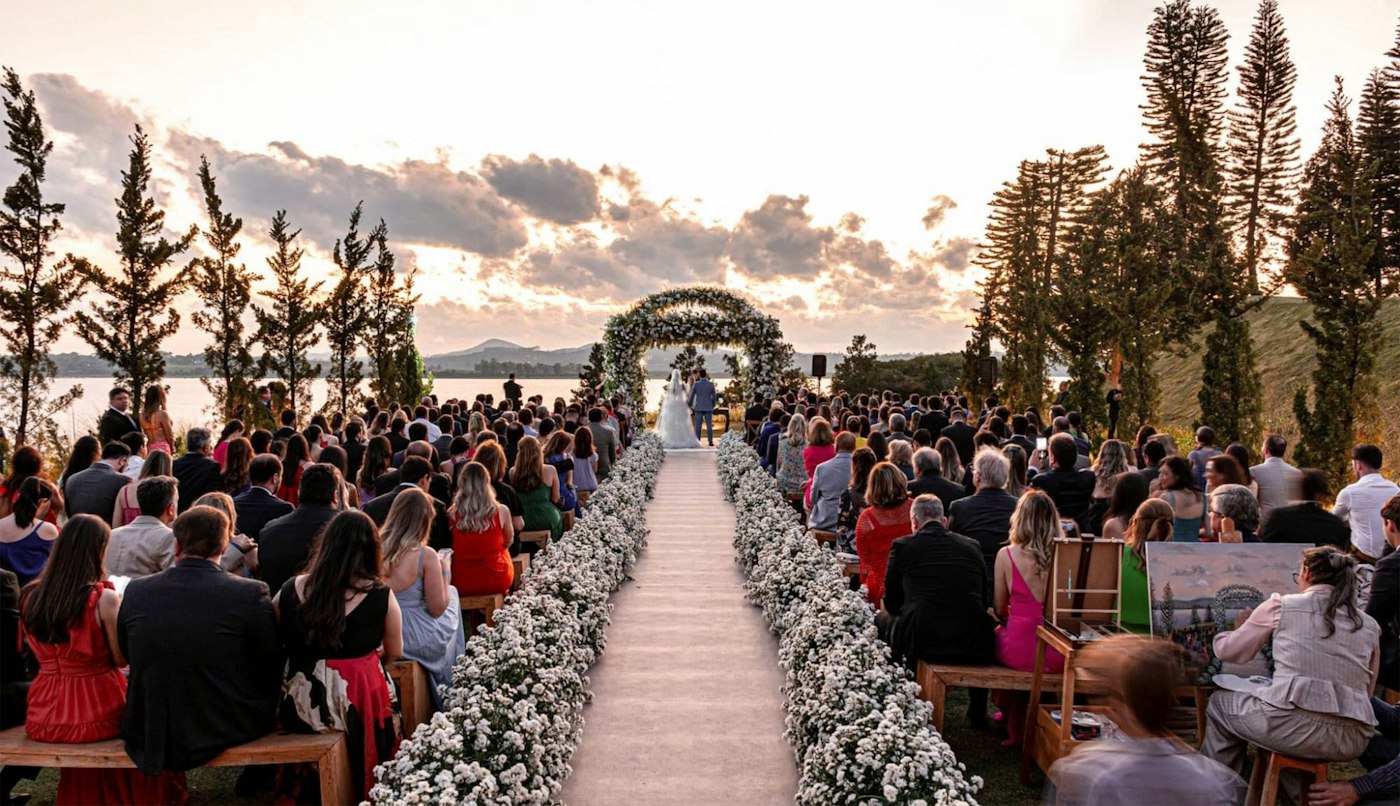
A good wedding day timeline starts from your ceremony time and works backwards: getting ready usually needs 3 to 4 hours, the ceremony 20 to 45 minutes, cocktail hour 60 to 90 minutes and dinner about 90 minutes, with the whole day running 10 to 14 hours (Joy, Bridebook). Below you'll find three ready-to-copy schedules for a morning, afternoon and evening ceremony, plus where your homemade decor gets set up and who does what.
This is about the day itself. If you are still months away, our month-by-month DIY planning timeline covers everything before it. Today is the payoff.
How long each part of the day really takes
Before you write a single time down, it helps to know the usual blocks. These are the ranges wedding planners work with:
- Hair and makeup: 30 to 45 minutes per person, with the person getting married going last. Joy's advice is to add 30 minutes to whatever you estimate, every time (Joy).
- Getting dressed and detail photos: 45 to 60 minutes, longer for a dress with lots of buttons (Joy).
- Ceremony: 20 to 45 minutes. Civil ceremonies run shorter, religious ones longer (Bridebook).
- Moving guests: people need 10 to 15 minutes to get from the ceremony to the drinks (Joy).
- Cocktail hour: 60 to 90 minutes, and family and couple photos (30 to 60 minutes) usually happen at the same time (Bridebook).
- Family photos: count 3 to 4 minutes per group (Joy). Ten groups is already 30 to 40 minutes.
- Dinner: 90 to 120 minutes. Speeches: 20 to 40 minutes in total. Dancing: 2 to 4 hours (Bridebook).
Short speeches are the easiest time saver there is. Three toasts of 5 minutes take 15 minutes. Three toasts of 12 minutes take 36, and the food goes cold (Joy). Tell your speakers their time limit kindly and early.
Three sample wedding day timelines
Here are the same steps for three ceremony times. Copy the column that matches yours and adjust from there. The DIY rows are the ones most timelines forget.
| What happens | Morning (11:00) | Afternoon (15:00) | Evening (18:00) |
|---|---|---|---|
| DIY setup crew starts at the venue | evening before | 10:00 | 13:00 |
| Hair and makeup begins | 6:30 | 9:00 | 12:00 |
| Photographer arrives, detail shots | 8:30 | 12:00 | 15:00 |
| Dressed, first look, couple portraits | 9:15 | 12:45 | 15:45 |
| Setup done, crew gets changed | 9:45 | 13:30 | 16:30 |
| Guests arrive | 10:30 | 14:30 | 17:30 |
| Ceremony | 11:00 | 15:00 | 18:00 |
| Drinks, family photos | 11:45 | 15:45 | 18:45 |
| Meal served | 13:00 | 17:00 | 20:00 |
| Speeches | 14:15 | 18:15 | 21:15 |
| First dance, cake, dancing | 14:45 | 18:45 | 21:45 |
| Last song | 18:00 | 23:00 | 0:30 |
| Pack-down crew | 18:00 | 23:00 | next morning |
These line up with the sample days Bridebook publishes, for example hair and makeup at 9:00 for a 3 p.m. ceremony and dinner at 7:45 p.m. after a 6 p.m. ceremony (Bridebook). Ours are a little tighter because a smaller wedding party gets ready faster. If more than four people are having their hair done by one stylist, start earlier.
Morning ceremony
A late-morning wedding is worth asking your venue about, since some price daytime slots lower, and it leaves the afternoon free for a relaxed lunch party. The catch is the early start. Do almost all of the setup the evening before, so the morning is only flowers, candles and anything that can't sit out overnight.
Afternoon ceremony
The classic. You get daylight for photos, time to set up in the morning and a natural flow into dinner. Most of the examples you'll see online use this shape.
Evening ceremony
Calm mornings and soft light for the ceremony, but the party runs late. Plan for the lights to be switched on before dinner starts, and agree with the venue what time everything has to be out. If you can, leave the pack-down for the next morning.
Where the DIY setup fits
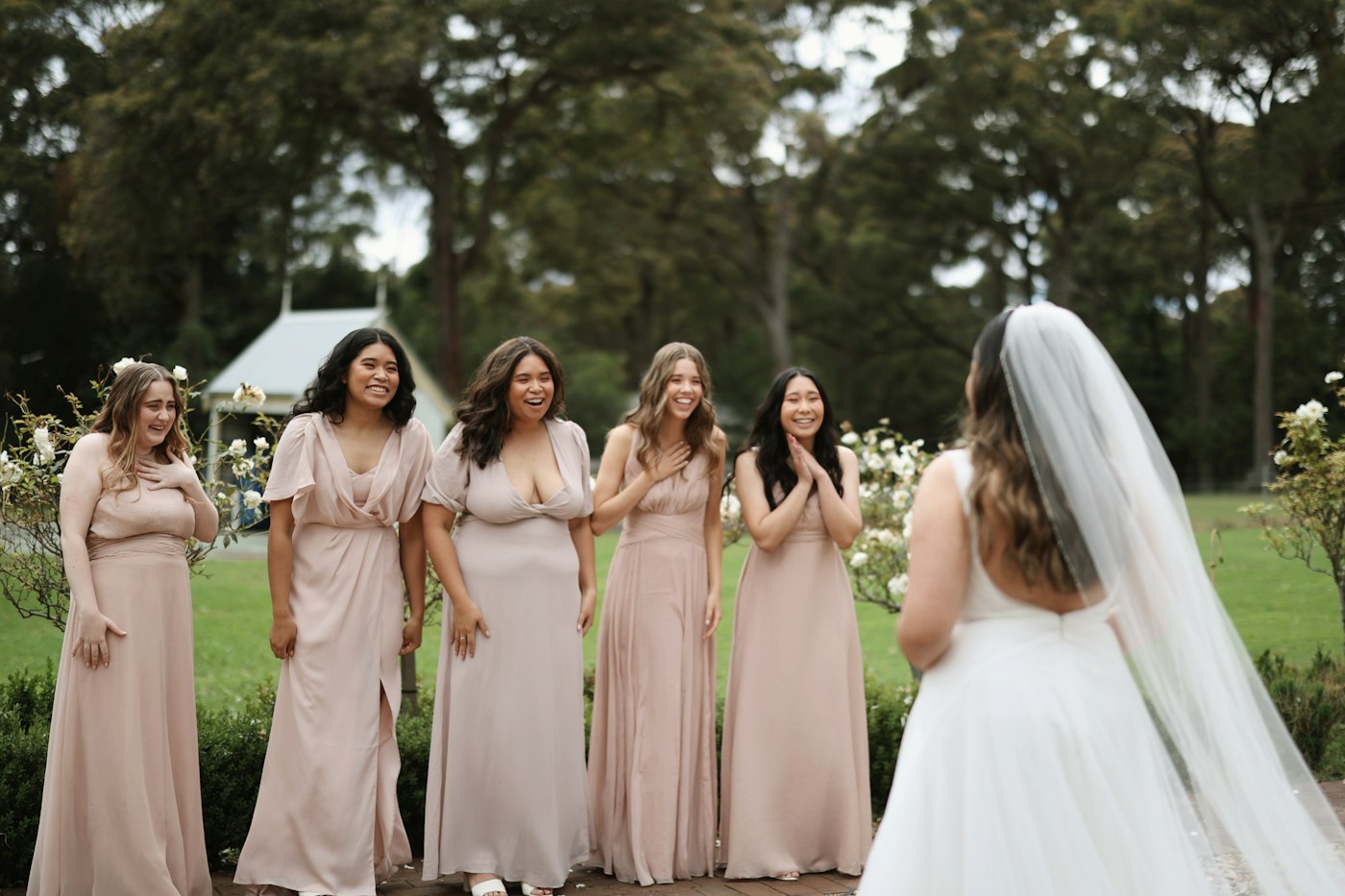
The biggest timeline mistake with homemade decor is assuming the couple will put it out. You won't. You'll be in a chair having your hair done. Hand the setup to a small crew and give them their own block in the schedule that ends well before guests arrive, so they have time to change and breathe.
Order the setup from big to small:
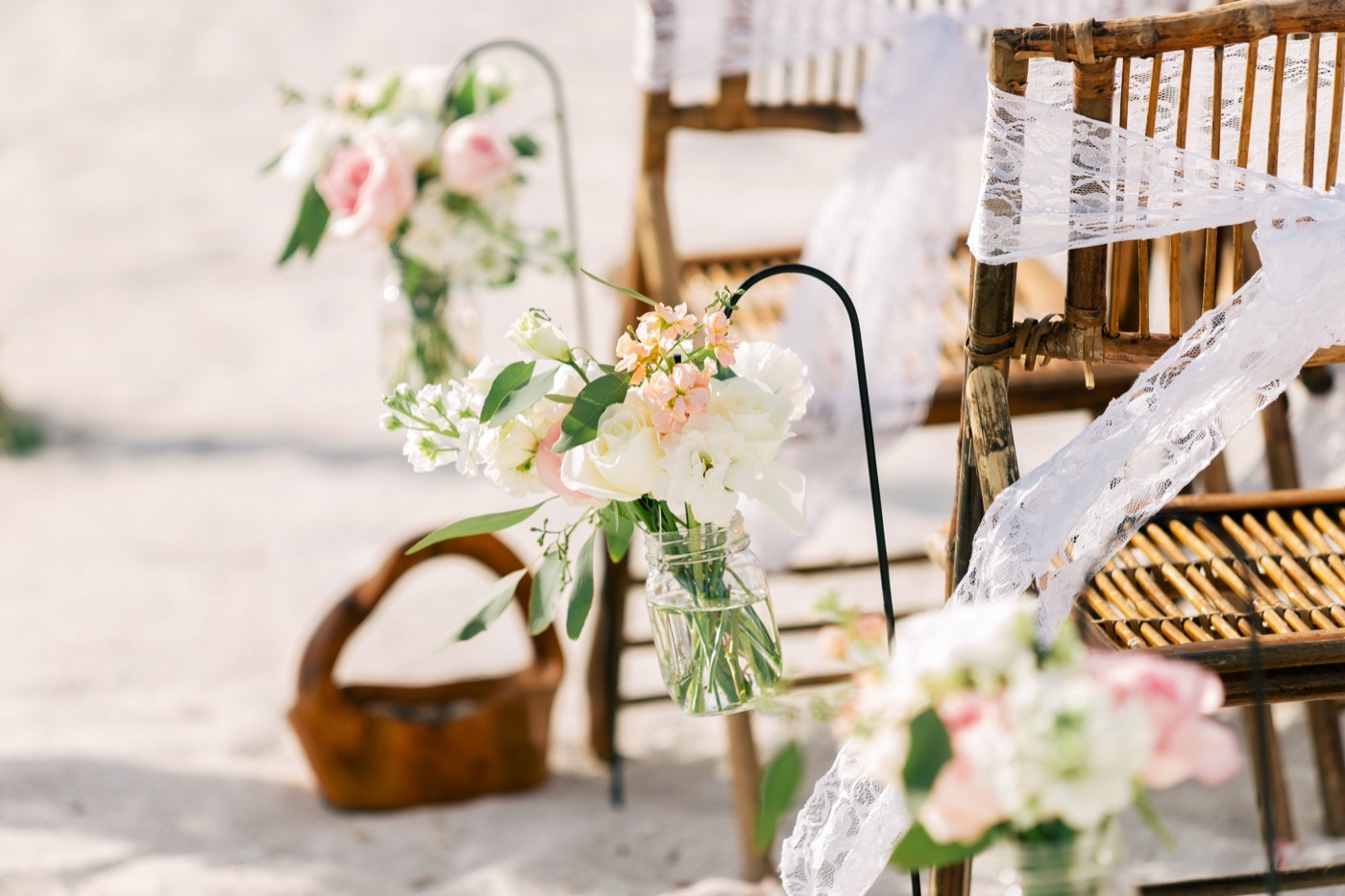
- Structures first: the ceremony arch, chairs and shepherd's hook aisle markers.
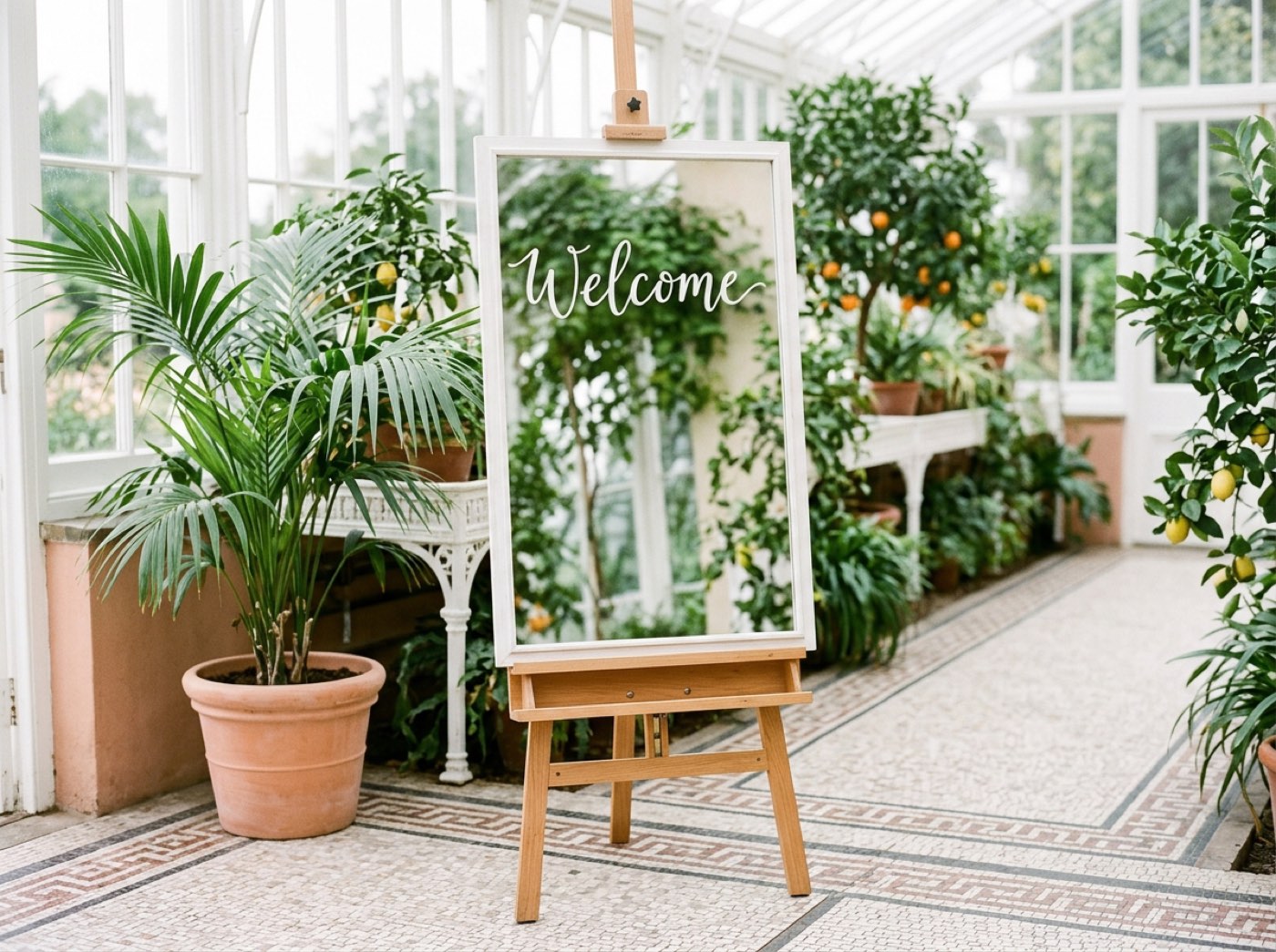
- Signs next: the mirror welcome sign at the entrance and the mirror seating chart where people come in for dinner.
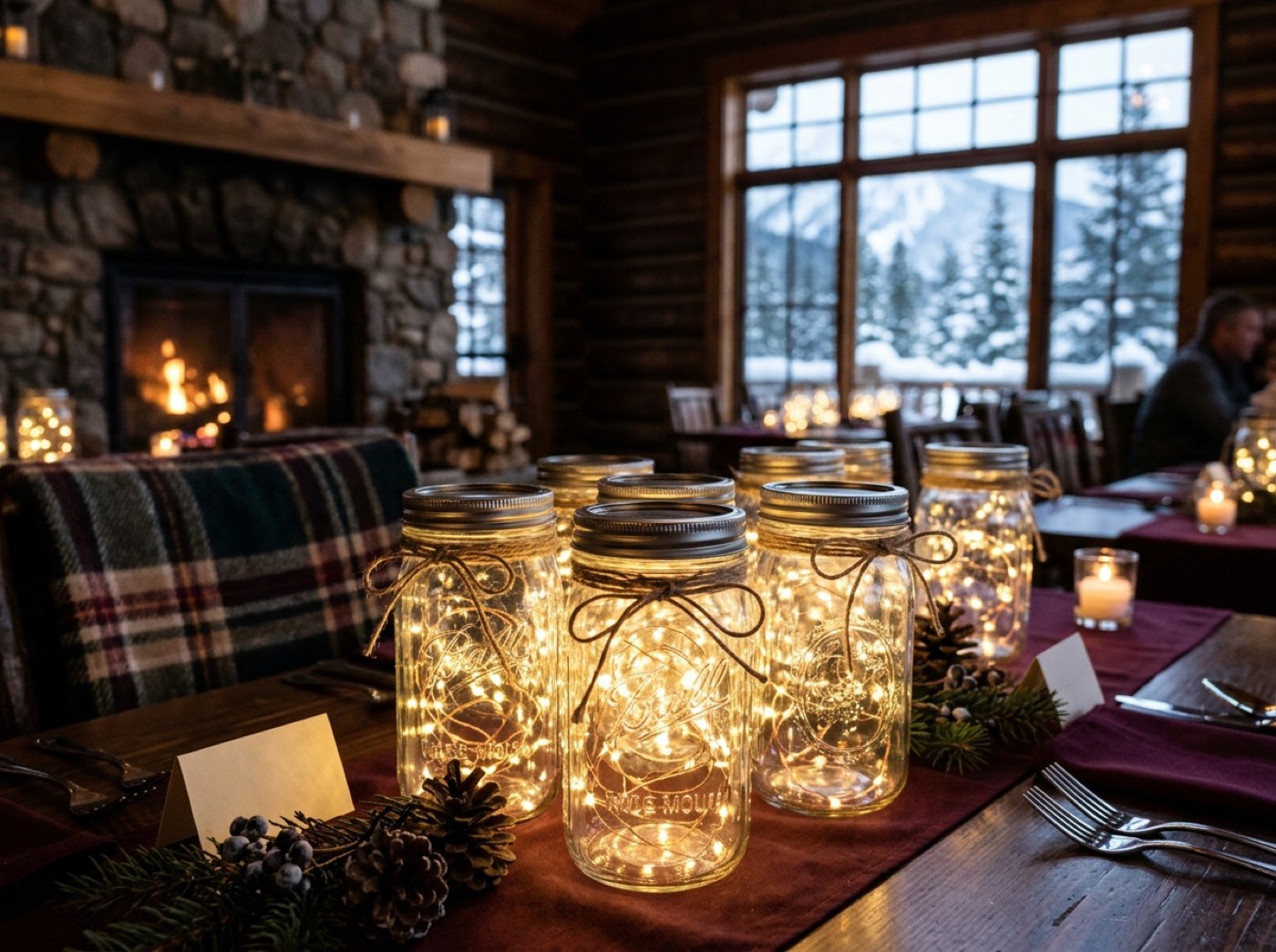
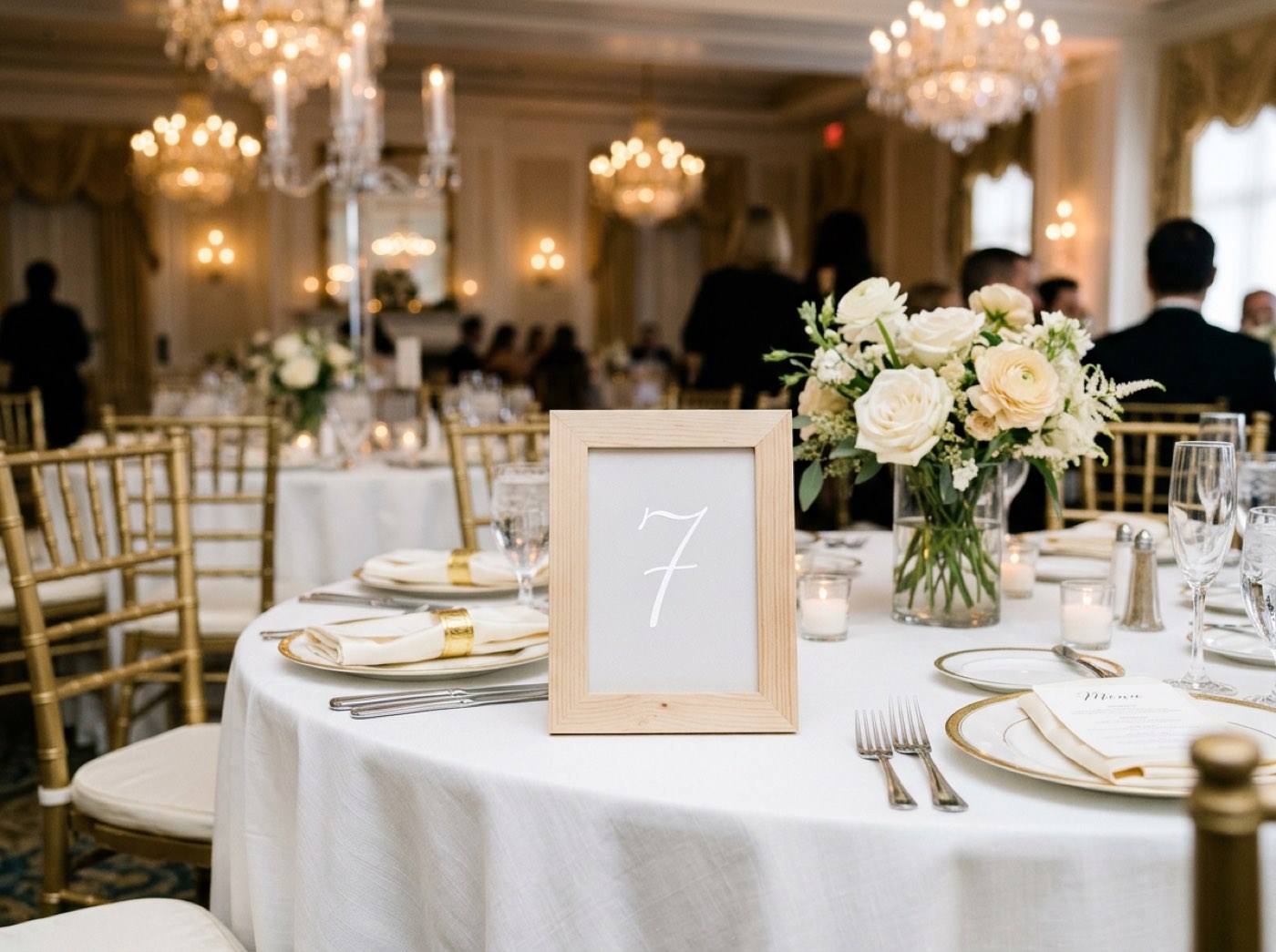
- Tables last: table numbers, then fairy light jars, switched on only once the room is ready.
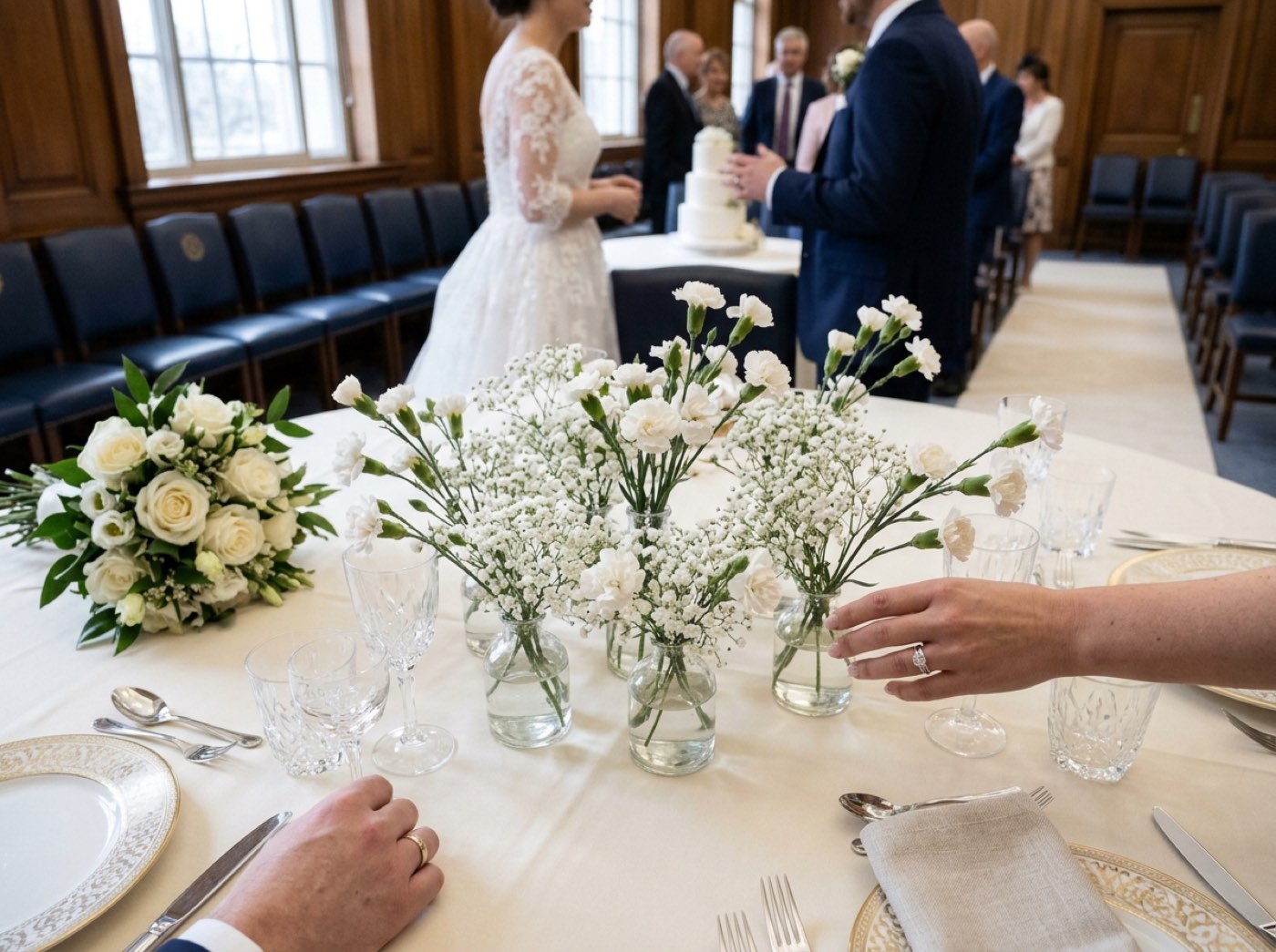
- Fresh flowers at the very end. The grocery store table flowers go in last so they stay out of the sun as long as possible.
The trick that makes this work is packing. Put every project in its own labelled box, tape a photo of one finished table to the lid, and your crew can copy it without asking you a single question.
Who does what on the day
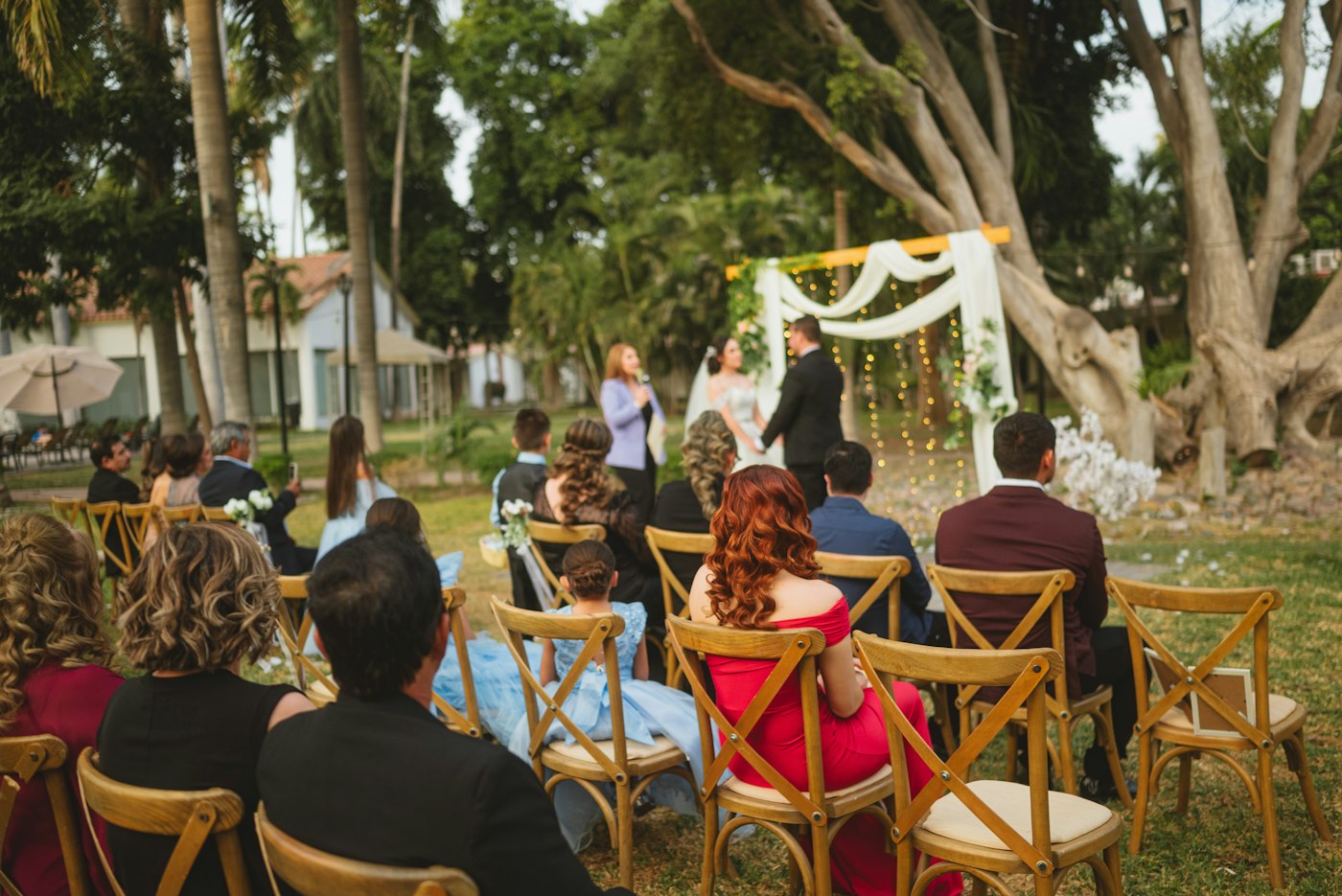
A small wedding without a planner runs smoothly when every job has one name next to it. Here's a simple split:
- The couple: get ready, get married, eat, dance. That's genuinely the whole list.
- A day-of captain: one calm friend who holds the printed timeline, answers vendor calls and keeps things moving. This person should not also be giving a speech or doing setup.
- The setup crew (2 to 4 people): arrive at the crew start time, work through the boxes and are done before the guests come.
- A family photo wrangler: someone who knows both families and calls each group from a printed list. It saves more time than anything else.
- The pack-down crew: a different set of friends who stayed sober enough to load the car. Rented items often have a return deadline, so put it on their list.
Send the timeline to everyone with a job, including the photographer and caterer. Joy suggests sharing it at least two weeks before the wedding (Joy).
Build in breathing room
Things run late. The hairdresser will be ten minutes behind, an aunt will wander off before the family photo. That's normal, and it's why the experts build in 15 to 30 minute buffers at the big transitions (Joy) and 10 to 15 minutes of breathing room between key moments (Bridebook).
Put the buffers in three places: after hair and makeup, after the ceremony and before dinner. If nothing goes wrong, you get a quiet moment together with a drink. And if something does go wrong, nobody but your captain will ever know. Once the timeline is written and shared, let it go. Your friends have this, and you get to enjoy the day you planned.
Guides in this article
Unlock our complete DIY library
Free
- Cost and savings estimates for every project
- Materials lists to help you plan
- The “How much can you save?” overview
- New blog posts with inspiration and advice
A short list of the cheapest projects with the biggest savings. We email it to you.
Full access
$29
- Step-by-step instructions for every project
- Cost and quantity tables for 50, 100 or 150 guests
- Pro tips and common pitfalls to avoid
- Printable checklists to keep you on track
- Save your favorite projects
- New guides added every week
One payment, yours to keep. No subscription.
More tips & articles
- DIY Wedding Planning Timeline: What to Do When, Month by Month, Including Every Craft Project
- Wedding Decoration Checklist: Every Item, Area by Area, With Real Prices
- DIY Wedding Signs: 7 Ideas, What They Cost and Which Ones You Actually Need
- How Many Centerpieces Do I Need for a Wedding? A Simple Count, Table by Table