How to Save Money on Wedding Photography Without Regretting It Later
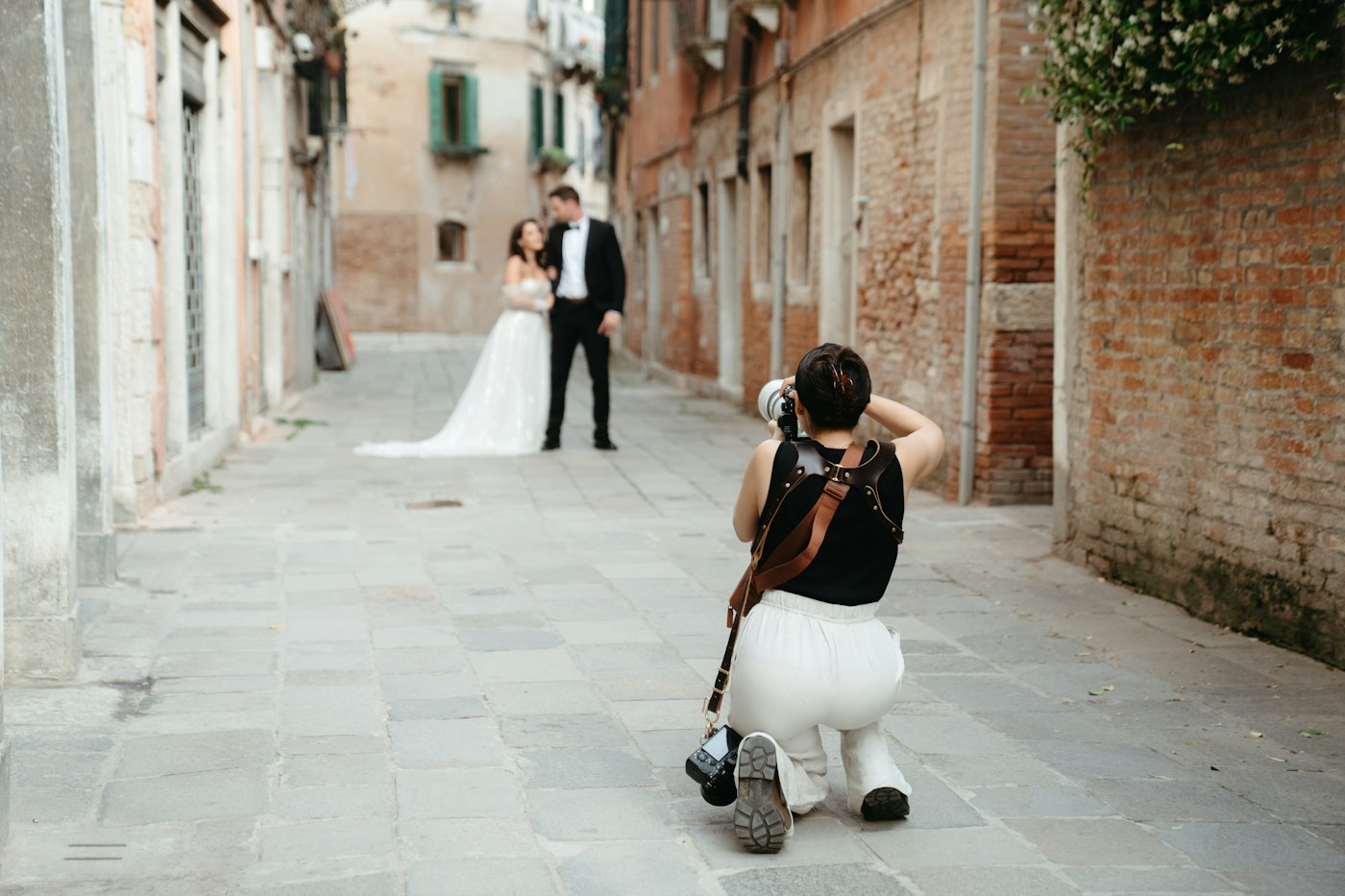
The best way to save money on wedding photography is to pay for fewer hours of a good photographer, not for a full day of a cheap one. Add an off-peak date, skip the printed album for now and let your guests cover the parts of the night a pro does not need to be at, and you can cut the bill by a third or more without losing the photos that matter.
Here is what photographers actually cost and where the savings are.
What wedding photography costs right now
Two big US studies land in slightly different places. The Knot's 2025 Real Weddings Study put the average spend on a photographer at $2,900 (Fox Business). Zola's Wedding Cost Index puts the national average higher, at $4,400, with a typical range of $3,500 to $5,300 and about 9% of the total wedding budget going to photos (Zola).
Where you live matters too. Zola found an average of $5,000 in New York City and $3,600 in Salt Lake City (Zola). So if your quotes are coming in around $4,000, nobody is ripping you off. That is simply the going rate, and it is why the tips below focus on changing what you book rather than haggling.
It also helps to know you are not alone in caring about this. In Zola's survey, nearly 55% of couples said the photographer is where they are most willing to splurge (Zola). Wanting good photos is normal. Paying for hours nobody will ever look at is optional.
1. Book the hours that matter, not the whole day
Packages are sold by time. Zola describes basic packages as 6 to 8 hours with one photographer, standard ones as 8 to 10 hours, and premium ones as 10 hours or more with two or more shooters (Zola). Every step up costs more, and the extra time usually goes to the slowest parts of the day.
Think about which photos you will actually frame. For most couples that is:
- the ceremony
- family group shots right after
- 20 to 30 minutes of portraits of the two of you
- the first dance, toasts and cake cutting
That fits in 5 or 6 hours if you plan the timeline around it. What you can usually skip: two hours of getting ready, the full cocktail hour and the late-night dance floor after the first hour of dancing. Ask your photographer to quote a shorter block and to show you which hours it covers.
2. Pick a date photographers can't fill
Peak-season Saturdays from May to October carry the highest rates, while Fridays, Sundays and November to April dates can lower package prices (Zola). A photographer who would otherwise have an empty Sunday in March has a real reason to say yes to your budget.
When you ask, be direct: "We're looking at a Sunday in March. Do you have an off-season rate?" Many photographers have one and just don't put it on their website.
3. Make the family photos fast
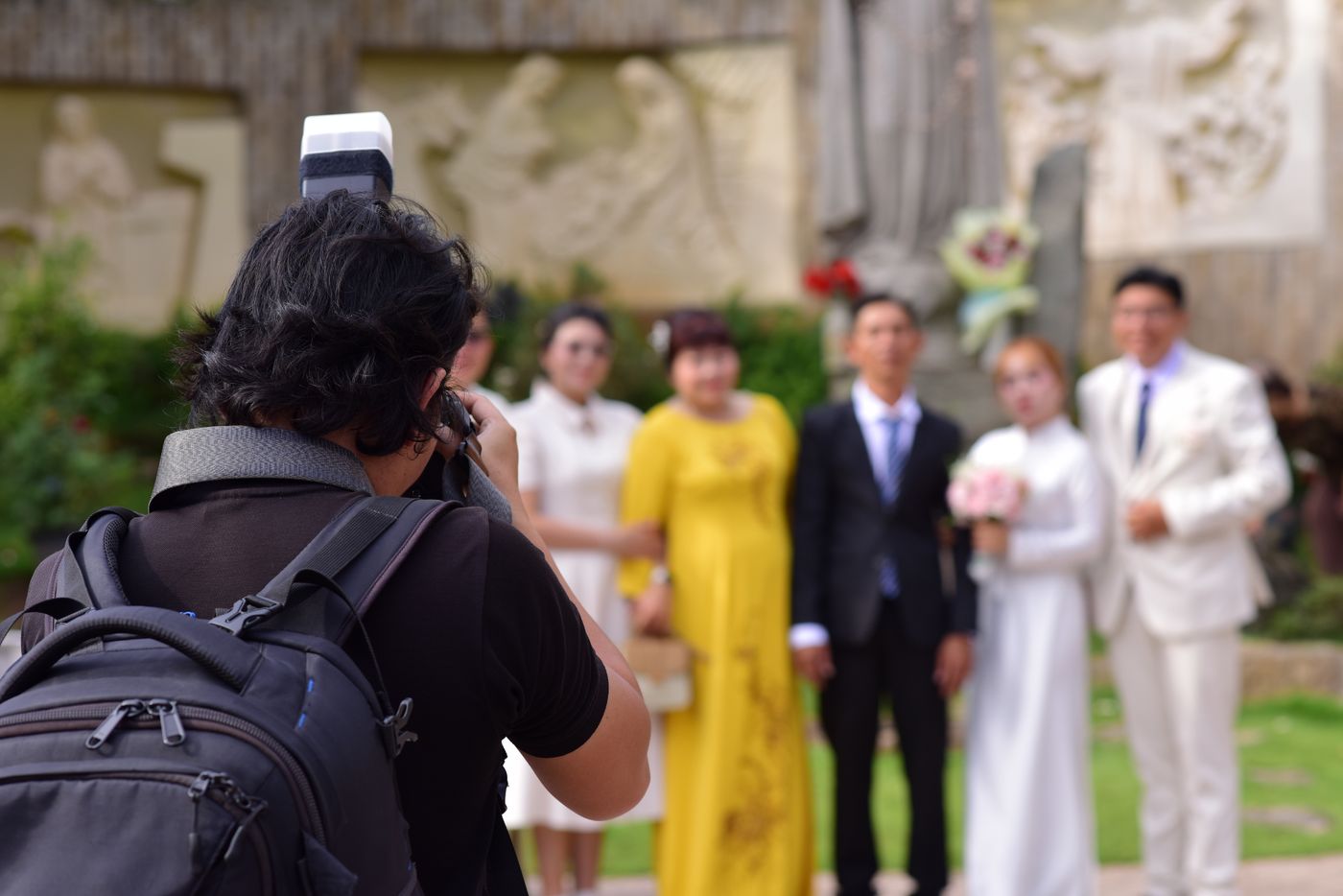
Group shots are where paid time disappears. Twenty minutes of hunting for a missing uncle is twenty minutes you are paying for. Write a short list of the groups you really want (8 to 12 is plenty), give it to the photographer a week before, and ask one loud, organized relative to call people up by name. Your photographer will love you, and you will get your portraits time back.
4. Drop the second shooter and the extras
A second photographer, an engagement shoot and a printed album are all nice. None of them are essential, and each one adds to the bill. A few ways to trim:
- Second shooter: worth it for 150+ guests or two locations far apart. For a small wedding in one place, one good photographer is enough.
- Engagement shoot: skip it, or ask a friend with a decent camera to take you out for an hour at sunset.
- Album: ask for the digital files with printing rights and order an album yourself a year later, when the budget has recovered. You will pick better photos once the day has settled, too.
Zola suggests tipping $100 for exceptional service and $50 to $75 for a second shooter or assistant (Zola). Put that in the budget now so it is not a surprise.
5. Let your guests cover the fun parts
Your photographer does not need to be on the dance floor at 11 pm. Your guests will be there anyway, phones in hand. Give them a reason to shoot and a place to put it all.
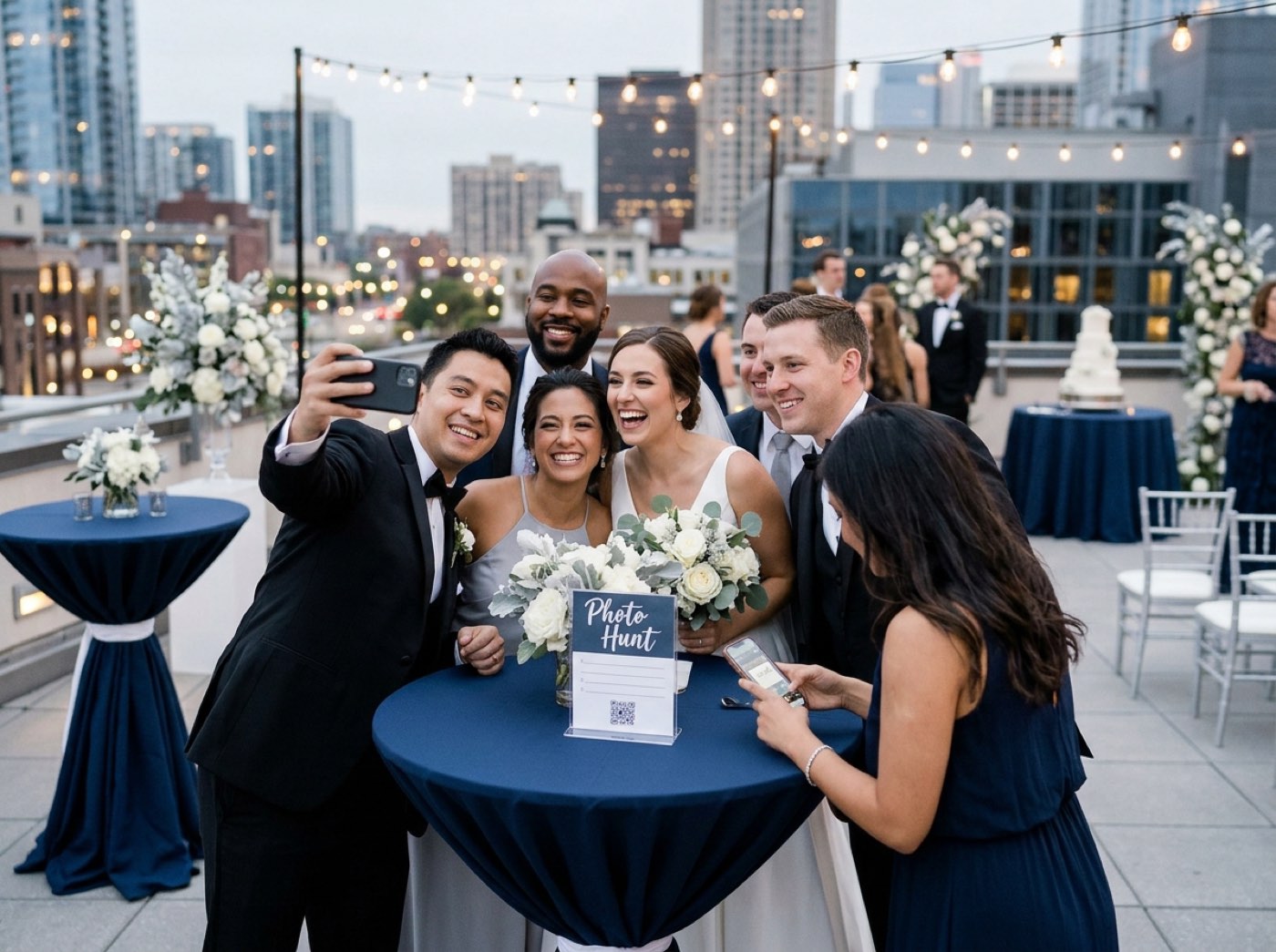
A photo scavenger hunt card on each table gives guests prompts to chase and a QR code to a shared album, at a little over $2 a card. You wake up the next day to hundreds of candid photos from angles a single photographer would never catch.
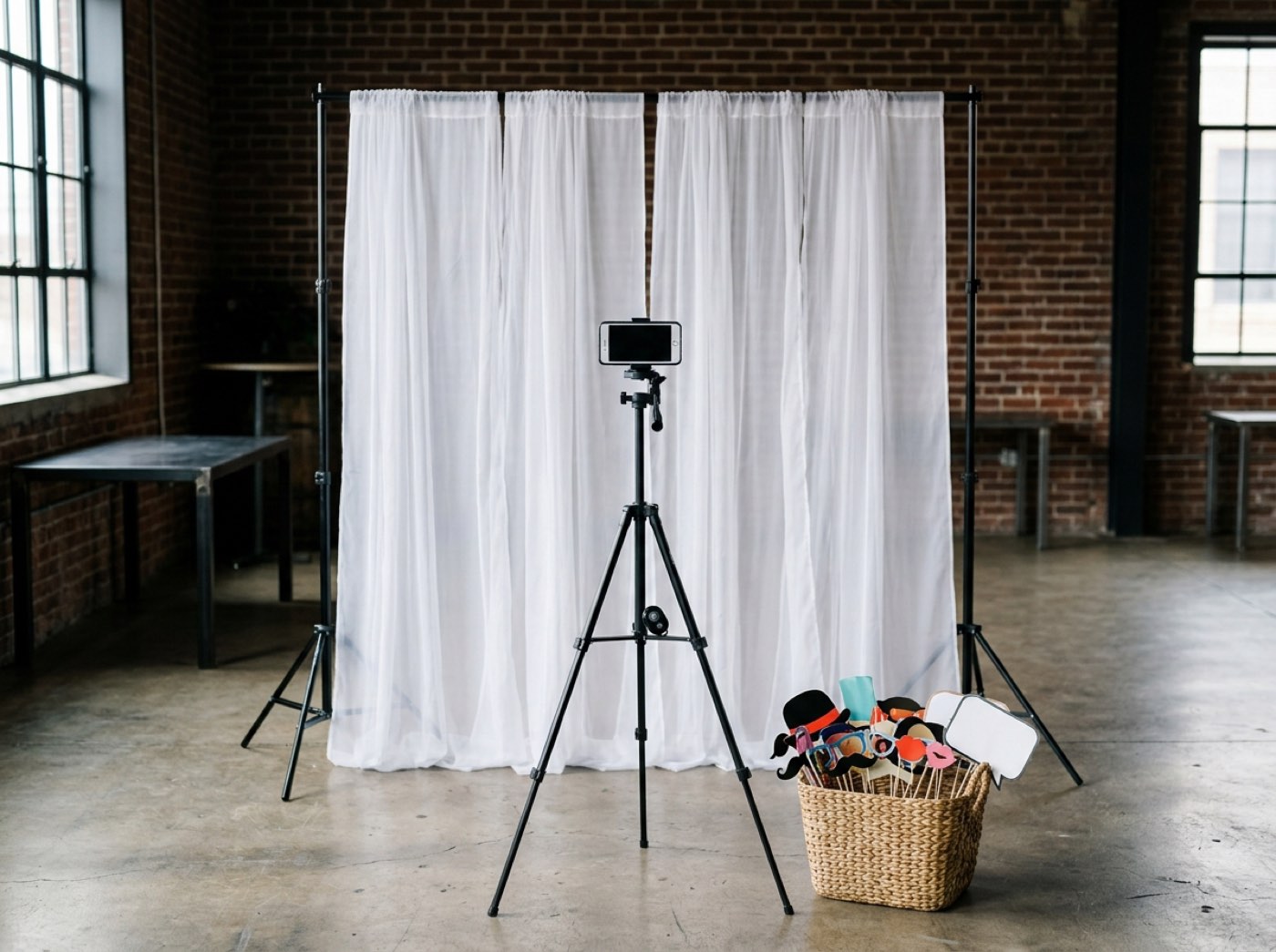
A DIY photo booth backdrop with a phone on a tripod does the same job for posed group shots, for about $98 in total. Guests take their own photos all night, which means your photographer can leave after the first dance with a clear conscience.
Be honest with yourselves about one thing: guest photos are a bonus, not a replacement. Phones struggle in dim light, and nobody will get your ceremony right from the third row. Pay for the ceremony and the portraits. Let guests cover the party.
6. Make the light do some of the work
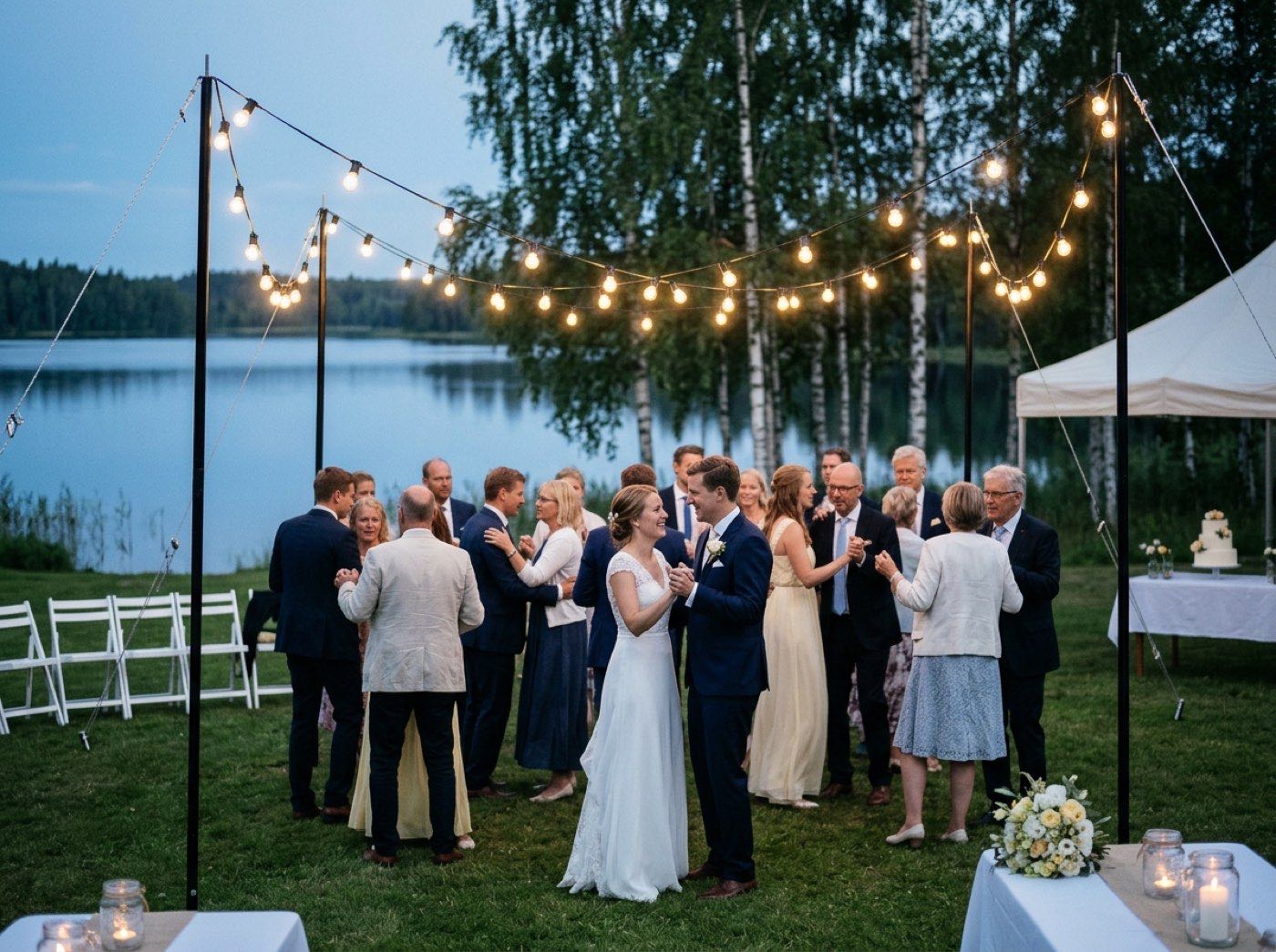
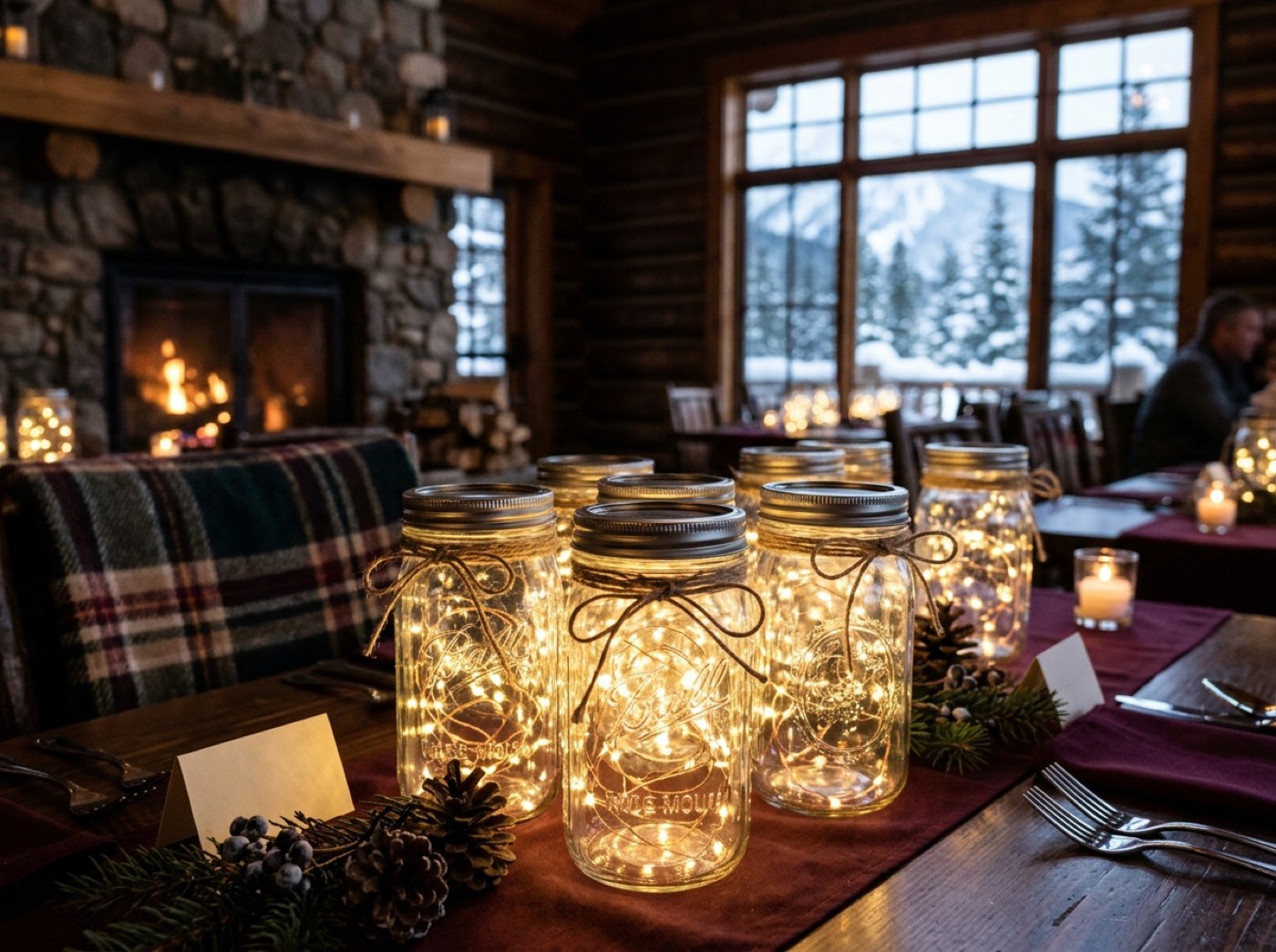
Good light makes every photographer faster and every phone photo better. If your reception is indoors or runs past sunset, warm light over the tables and dance floor helps a lot. A string light canopy over the dance floor costs about $161 to make and gives soft, even light for both your photographer and your guests' phones. On the tables, fairy light jars at about $1.65 each add a glow that looks lovely in the background of portraits.
Also, plan your portraits for the hour before sunset if you can. It is the easiest light of the day, and you will need fewer shots to get the good ones.
7. Hire newer, not cheaper
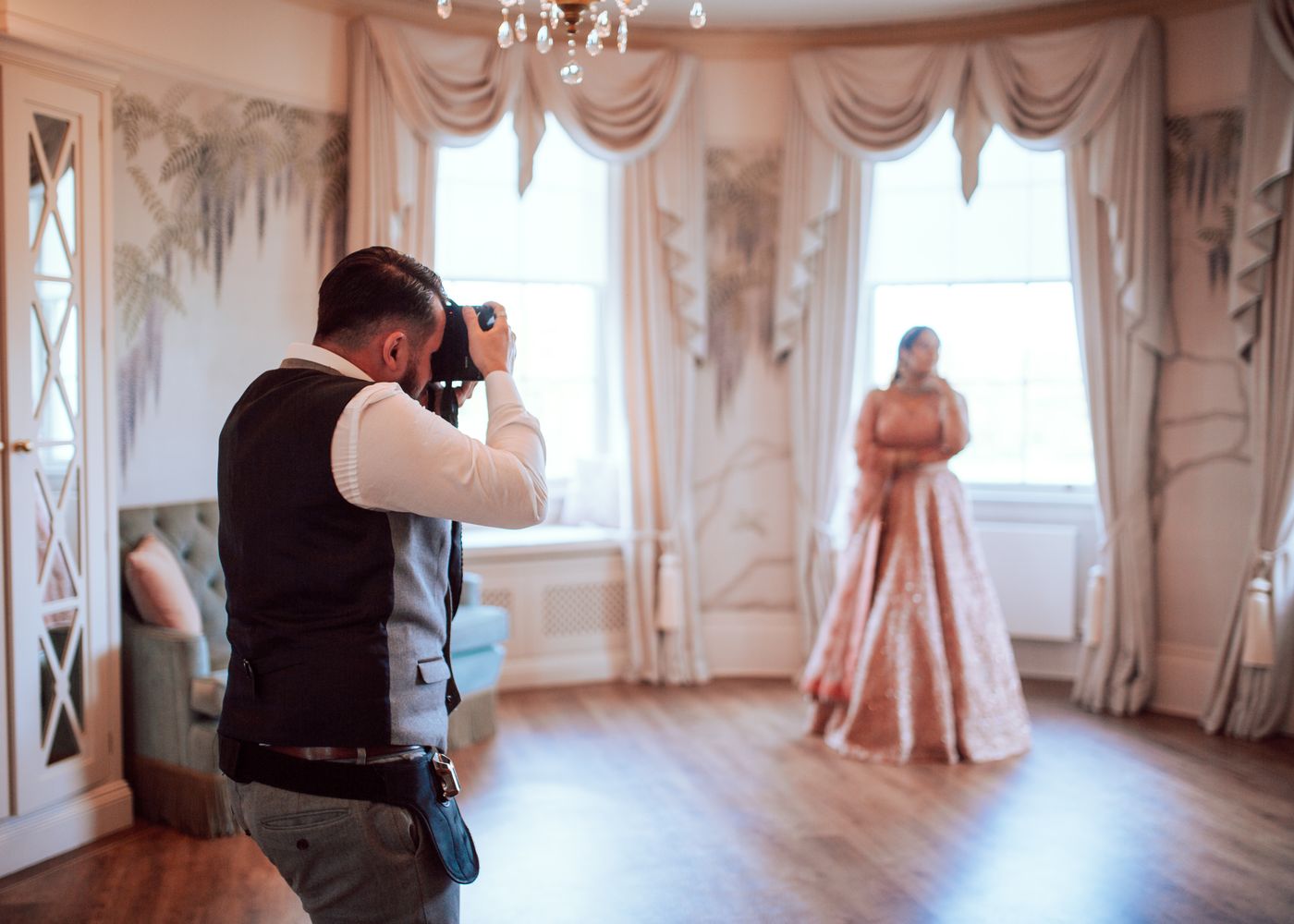
There is a difference between a photographer who is new and one who is just cheap. A newer photographer who has assisted at plenty of weddings, has a full gallery to show you and is building a portfolio will often charge less than the average while still knowing how to handle a dark church or a fast first kiss.
Before you book anyone at a lower price, ask to see two or three complete wedding galleries, not just a highlight reel. Check how they handle indoor shots, group photos and moving moments. If those look good, you have found your bargain.
Where not to cut
Saving money on wedding photography should never mean asking a friend with a nice camera to do the whole day for free. It puts a lot of pressure on them, they miss the wedding, and if something goes wrong there is no backup. If the budget is very tight, book a professional for the ceremony and portraits only and let your friends and guests take over from there.
The short version: fewer hours, a quieter date, a quick family shot list, no extras you don't need yet, and guests armed with a scavenger hunt and a photo booth for the rest of the night. You will still come home with the photos you will look at for the next fifty years, and a little more money for everything else.
Guides in this article
Unlock our complete DIY library
Free
- Cost and savings estimates for every project
- Materials lists to help you plan
- The “How much can you save?” overview
- New blog posts with inspiration and advice
A short list of the cheapest projects with the biggest savings. We email it to you.
Full access
$29
- Step-by-step instructions for every project
- Cost and quantity tables for 50, 100 or 150 guests
- Pro tips and common pitfalls to avoid
- Printable checklists to keep you on track
- Save your favorite projects
- New guides added every week
One payment, yours to keep. No subscription.
More tips & articles
- Questions to Ask a Wedding Photographer Before You Book (and the Answers to Listen For)
- Cheap Wedding Rings: An Honest Guide to Metals, Real Prices and Resizing
- Cheap Wedding Venue Ideas: 8 Places That Cost a Fraction of the Average
- The Cheapest Month to Get Married (and the Cheapest Days, Based on Real Data)